
Do (cis)men even exist?
Swimming in an Aquarian inquiry on a wet lunar new year...

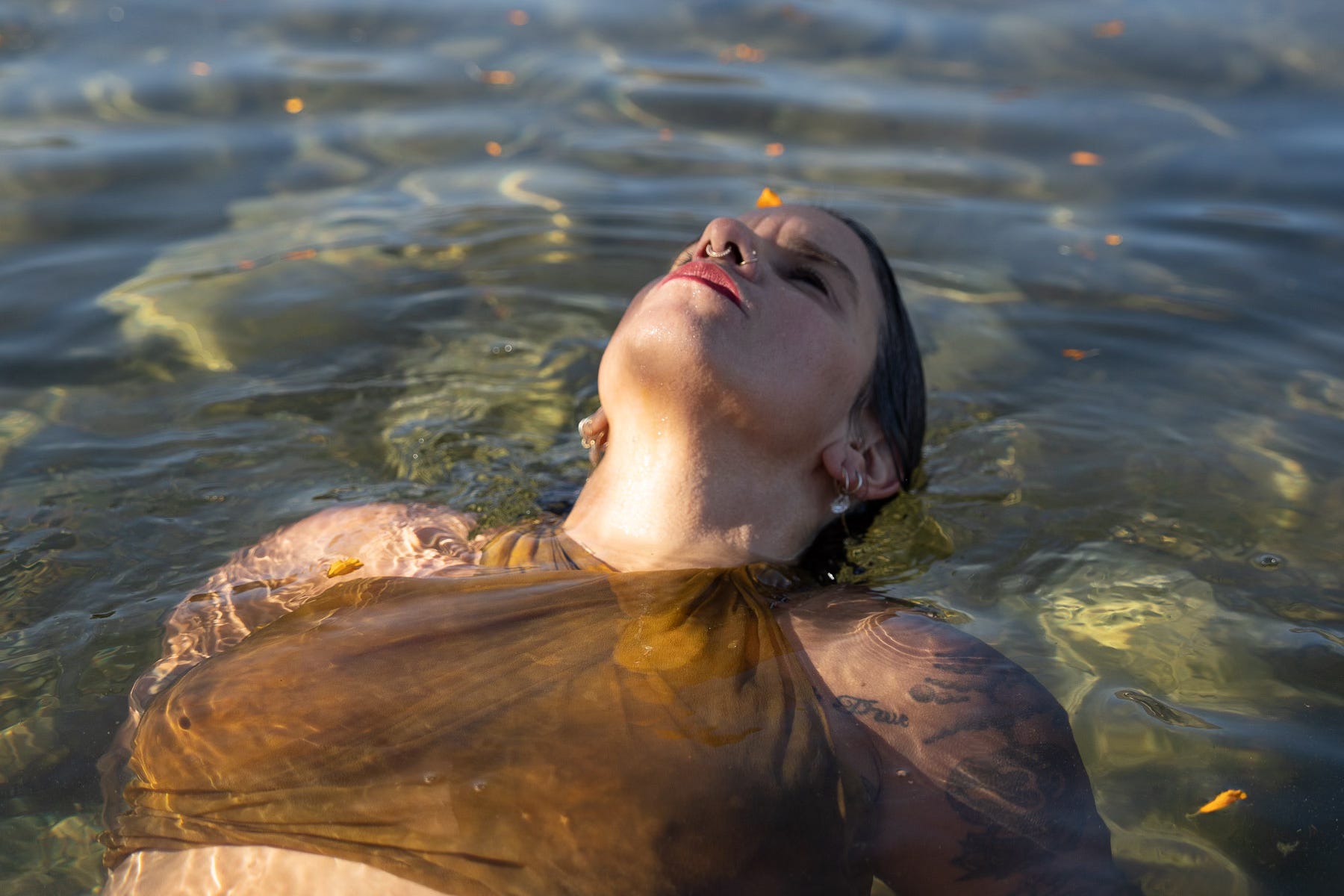
As a 0 degrees Aquarius Rising, this is my Aquarian calling: to challenge who we have been conditioned to be. Baptism by fire and floods.
All human embryos begin with the same basic reproductive structures, and the early developmental pathway is what researchers call female-typical by default unless specific genetic and hormonal signals shift development toward male-typical anatomy. Based on the principles of embryology and developmental biology, specifically as described by authors such as Bruce M. Carlson in Human Embryology and Developmental Biology
According to NIH / National Library of Medicine embryology summaries, scientists often describe female development as the default pathway — it occurs without the additional gene-triggered hormone cascade required for male differentiation.
If female is the default, do men really exist?
(Full credit and blessings for this idea that (cis)men don’t actually exist to my good friend Marley follow her and our queer Aquarian-Piscean musings.)
If you identify as male or have a c*ck, don’t pull away, lean in. Consider what you’ve been told “male” means, and ask yourself: how much of your identity was a choice? How creative have you been in building it?
Most mainstream spirituality has been authored by men claiming to kill their egos, yet missing what it might mean to release the identity of being a “man” — even briefly, playfully, experimentally. Women, queer, and trans folks already know how necessary it is to bend, shift, and play with identity just to survive, thrive, and reclaim their power in this world.
If female is the default, do men even exist? Don’t pull away if you have a c*ck — lean in. What’s “male,” really? How much of it did you choose? Most spirituality taught by men misses what it could mean to play with, unmake, or abandon that identity — something women, queer, and trans folks already do to survive and thrive.I was the first girl born into an Italian American family filled with boys and men. The pressure-filled identification and projection put on my little body as a girl was tremendous — thick, constant, in the air, spoken and unspoken. My mother used to tell me my father wanted a girl so bad after having such a hard time having my brother when he was just 17 that, eleven years later, while pregnant with me, he used to drive over the train tracks in Belleville, New Jersey on purpose to “shake the balls off” me in the womb.
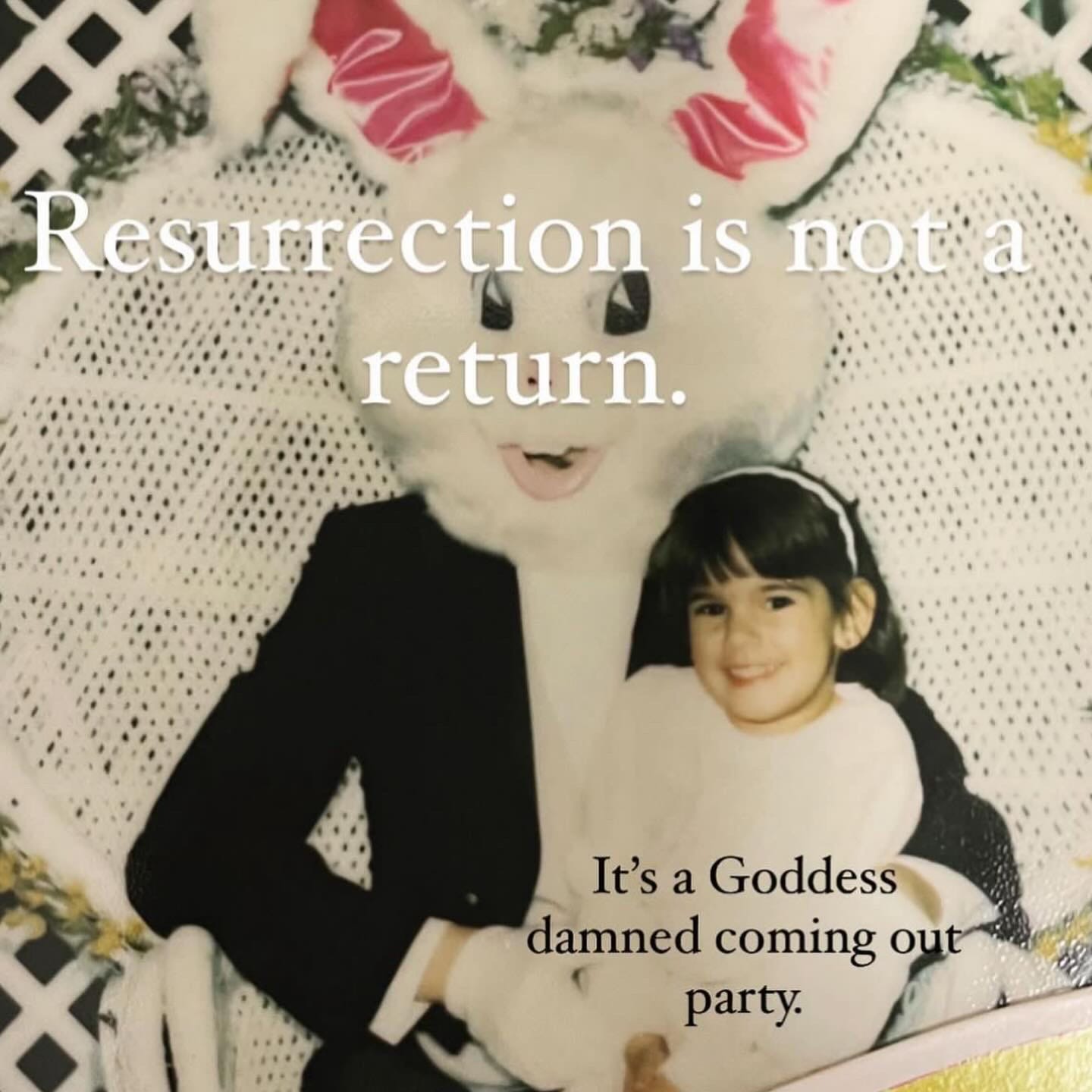
It didn’t work.
Men, maleness, misogyny, the identity and construct of men — that was the undeniable and insidious atmosphere I grew up inside. My whole world revolved around the ideas and feelings of men — their preferences, opinions, approvals and disapprovals — contorting my body unconsciously to the the subtle weather of whether they were pleased or pissed off.
When I was three we moved with my grandmother to Old Bridge NJ, 40 minutes south of where I was born. It was a break in a long lineage of family living close together.
From a village called Verbicaro in Southern Italy — in the mountains of Calabria — to the shores of New Jersey via Ellis Island, our family had always lived as neighbors. Doors open. Kitchens shared. Children tended by many mothers. The apartment my parents rented when I was born was next door to my grandparents, down the street from my dad’s brother and his wife.
My uncle Mark and my father Pete both found heroin on those streets. Where did it come from? The 70s? My grandfather’s trauma as a D-Day vet passed down to his only two sons through physical violence and betrayal they couldn’t handle the pain of? Was it just what people did? Both my uncle Mark and my father Pete died because of addiction. My uncle shot himself in the head, and in that same house my father later collapsed with a brain aneurysm, overdose unknown and hidden from me until his deathbed confession.
Is it all connected to the intense identification with men and maleness — to the disconnect from the mother, I often wonder and a sense of already knowing the answer. The split where older pagan, land-based practices slowly became controlling over time, where earth ritual became church ritual but the body got quieter inside the walls.
Does the pain of leaving one place for a “better life” somewhere else haunt the blood like a void that keeps asking to be filled — by something, someone, anything?
My ancestral ties take me back to times that feel like a matriarchal miracle — the Black Madonna church in Southern Italy that once was an Isis temple showed me this in my body. As a local family played us traditional songs through instruments they made out of cherry wood and the sound filled the cathedral, my eyes shut and I fell into an abyss of ancestral remembrance — women and children barefoot on the land, singing and dancing, skirts and hair moving, dust rising.
This life — grief-soaked and pleasure-lit — is never lost. Only forgotten. Then remembered through ritual and right relationship. Long before Christianity, the south — especially regions like Calabria — kept earth-based rites: caves, night processions with drums, blood and milk offerings, women-led fertility and mourning rituals, seasonal initiations tied to soil, seed, and moon. Body first, doctrine later.
My good friend Marley often says men don’t exist — that we all begin and are birthed in the mother’s body physically and cosmically, formed from the same tissue, held. Maybe that’s why I teach others to listen to instead of only fear the power inside vaginas, their own or the ones closest to them, as oracles of truth and intelligence — wanting the earth and her children at the center again.
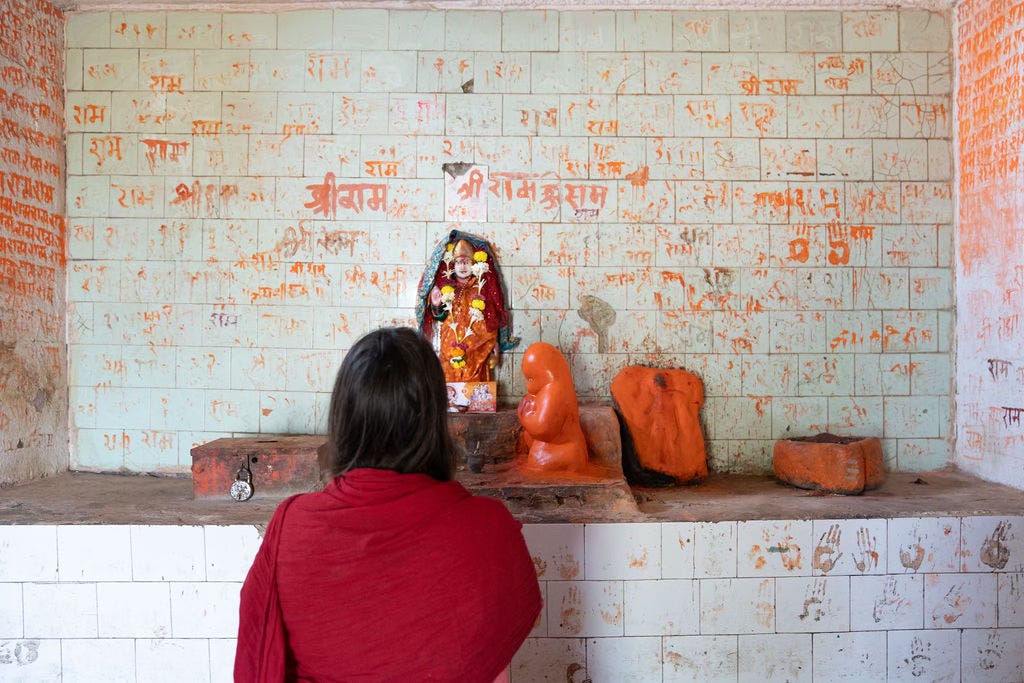
Grief and pleasure share a border so thin you have to hums to hear it. Anyone who has journeyed deep knows the pulse — weeping and ecstasy beneath the same sharp pain of longing.
Every year on Good Friday in one of my ancestral places, men beat their legs with glass until blood runs down their calves — for Jesus and for Mary, Mother of Grief. Pain and devotion made public. They pour it on every Ave Maria threshold in a trance moving from one station to the next for hours (I’ve been.)
I can’t help but get curious – if women’s menstrual blood were reverenced for its power and potency, welcomed at temples as sacred offering, the only blood that does not come from violence, wouldn’t the world be different?
If what cycles from the body were honored instead of hidden — if initiation replaced shame, if rhythm replaced domination — would we still believe violence is what wakes us to our worth, belonging, and beauty?
I think not. I think we need remembrance and ritual for our grief, rage and aliveness. And these aren’t just my thoughts, we’ve been holding space for them for years and there is evidence and thousands of humans backing this research. We came to reclaim reverence. To stop calling holy things dirty and then wondering why everyone feels starved and sick.
Money can’t buy you the belonging and un-inhibited joy and connection what you want, it’s in the unlearning of the colonial wounds, the witch trials, inner misogyny, racism and homophobia that we unlock the power we have always carried inside, to create. To give birth to new worlds.
In a world where Earth is honored as rich, bodies are loud, and ritual is visceral — how could the food and the fucking not be sacred?
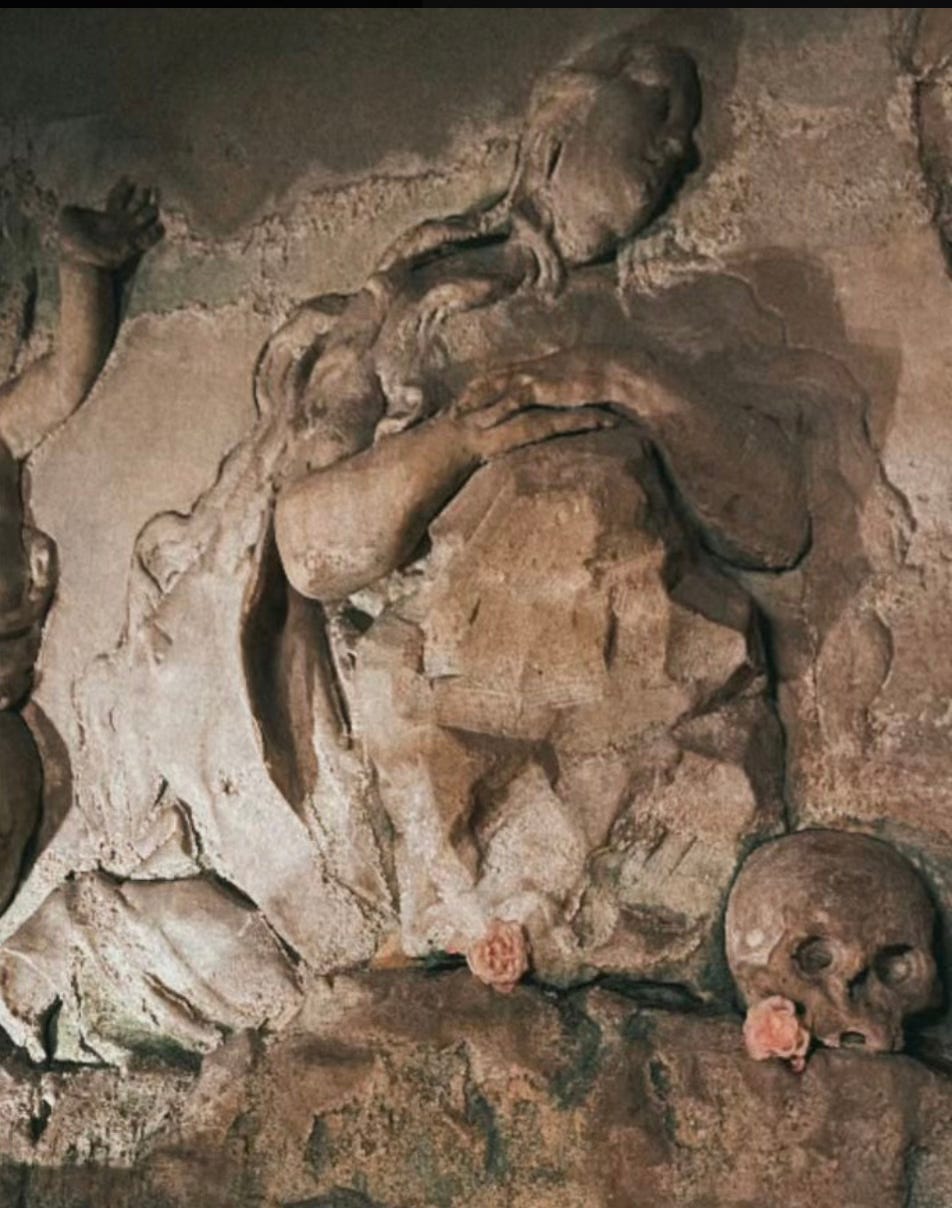
How could we not do what we can to embody the eros of our ancestors and overflow with wisdom as a result? As a 0 degrees Aquarius Rising, this is my Aquarian calling.
Thank you for reading would love to hear your thots meow, I mean below, and if you’re inspired to be together apply for our Magdalene womb and writing pilgrimage open to all who live in devotion to the sacred, living power of the feminine. Registration closes in three weeks… don’t sleep.
Wow. This. What would it be like for the men folk to know they’re a jazz riff on the chord of womanhood? I imagine it would lead them to be more Pan, more Dionysus, instead of more Yahweh. This is a brilliant a provocative post.
damn babe, we on some same wavelengths over here, just found this right as. I was finishing up this one: https://bravenewyou.substack.com/p/ep-010-white-men-are-an-empty-black
this is gold, thank you so much for sharing. especially this: "Does the pain of leaving one place for a “better life” somewhere else haunt the blood like a void that keeps asking to be filled — by something, someone, anything?" chillsss